3D Printed Christmas Ornaments: Vase Mode, Caps and Filament
A 3D printed Christmas ornament is usually one thin wall printed in vase mode, with a separate cap and loop on top. This guide covers which shapes print without supports, the settings that make a vase‑mode ornament strong, five ways to hang it, which filament shines best, and how long it takes.
Print the body in vase mode (“Spiral vase” in Bambu Studio) with a wide 0.7 mm line on a 0.4 mm nozzle, neck down on the bed — the slicer closes the tip by itself. Print the cap with a loop separately in normal mode and press it onto the neck. Use silk PLA: the sheen runs along every rib. A 70 mm ornament takes about 34 g and an hour.
Why vase mode
In vase mode the printer draws one continuous spiral from bottom to top: no seam, no infill, no top layers. That suits ornaments perfectly. They are light, there is no seam stripe, and shiny filament reflects evenly all the way up.
- One closed outline per layer. There can be no hole in the wall, so the loop for the string lives on the cap.
- Walls no flatter than the limit. Each layer sits on the one below, so the ornament stands neck down and the pointed tip ends up on top.
- One model at a time. Bambu Studio prints one vase‑mode object per plate, so a set is many plates in one project.
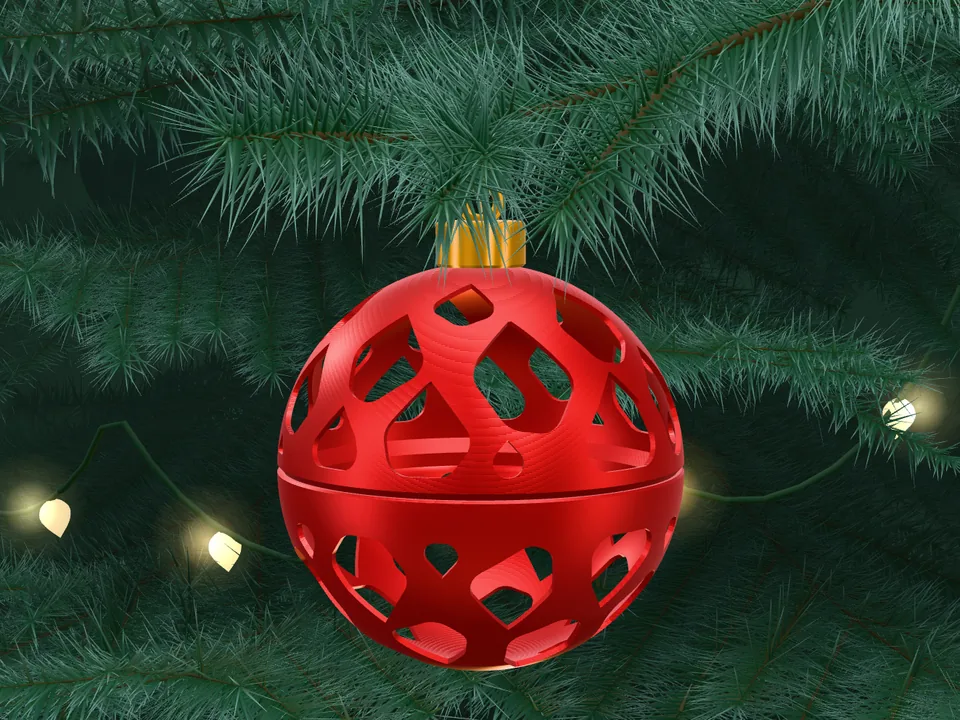
A perfectly round ball will not come out of vase mode: near the neck and the tip the wall cannot get flatter than the limit, so you get a short collar under the cap and a small nub at the bottom, like a glass bauble. A truly round ball prints as two hemispheres in normal mode that join with a snap or a thread.

Print settings
| Setting | 0.4 mm nozzle | Why |
|---|---|---|
| Mode | “Spiral vase” on the ornament plate | One continuous wall |
| Line width | 0.7 mm (outer wall and first layer) | Strength and steeper walls |
| Layer height | 0.2 mm, fine option 0.12 mm | Thinner layers allow flatter walls |
| Bottom layers | 3 | Close the neck, the ornament stands firmly |
| Brim | Outer only, gap 0 | A small neck won’t pop off the bed |
| Outer wall speed (silk) | 40–60 mm/s | An even sheen, no under‑extrusion |
Use a 0.8 mm line on a 0.6 mm nozzle and 1.0 mm on a 0.8 mm nozzle. In Ornament Craft all of this is already inside the 3MF project: spiral vase is on for the ornament plates, and line width, bottom layers and brim are set per part. You only pick the printer and the filament profile.
Let the bed cool and lift the ornament with a scraper under the brim, never by the tip. Snap the brim off with your fingers.
Caps and hangers
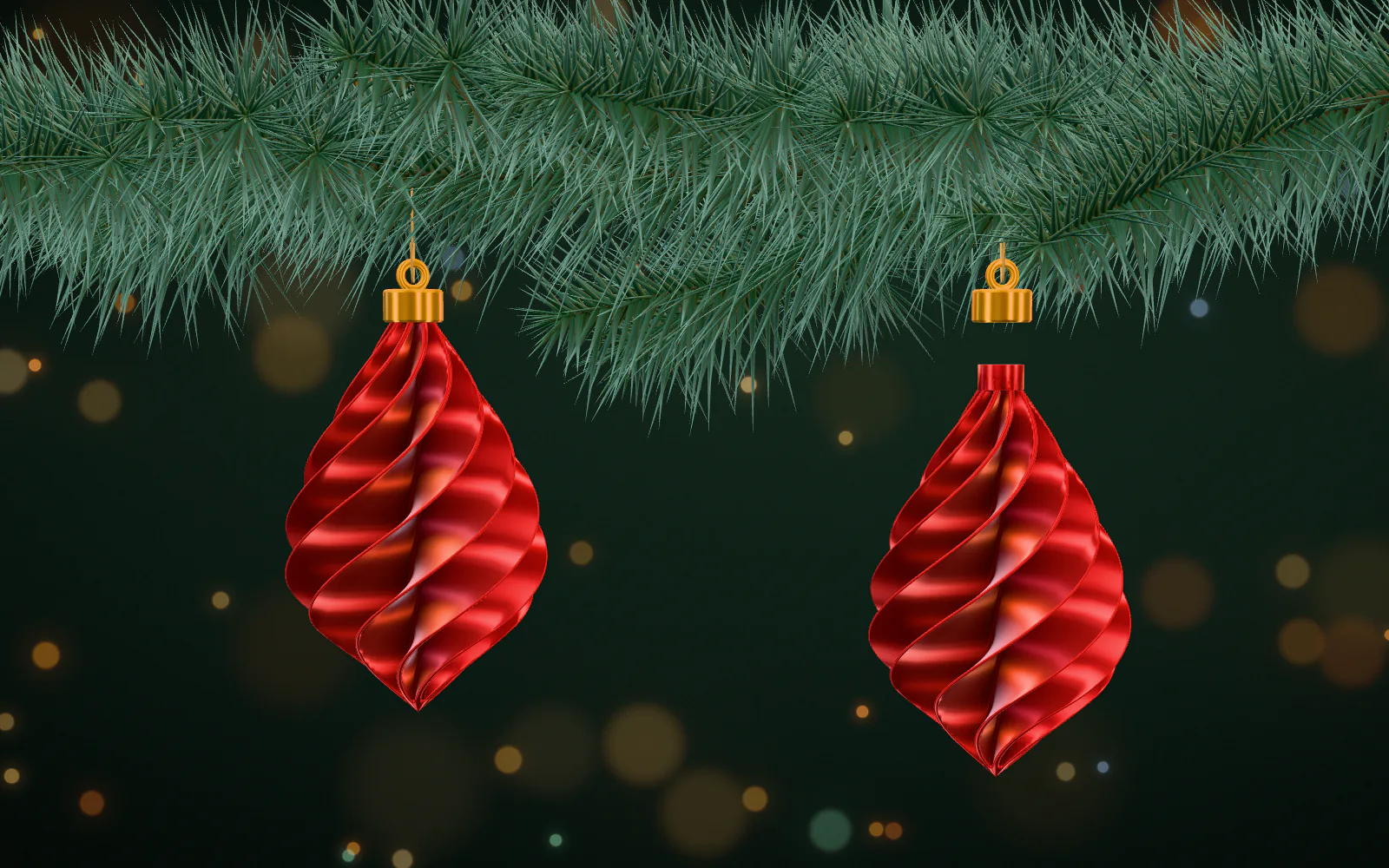
- Press‑fit cap
Slides onto the neck with no glue. Six crush ribs inside absorb printer tolerance; choose Tight, Medium or Loose. If it is off, reprint just the cap — a few minutes.
- Screw‑on cap
Threads onto a solid neck, clockwise until it stops.
- Snap‑on cap
Tabs click over a bead on the neck.
- Through hole
A hole right in the solid neck, no cap needed.
- Store‑bought metal cap
The neck stays open for the cap’s spring wires.
Which filament
A single vase‑mode wall shows the filament more than the shape does. Silk PLA (Bambu PLA Silk+) catches light on every rib and fin. Dual‑colour silk changes colour as the ornament turns. Galaxy and Sparkle add flecks. Matte is for caps, tags and deep relief that reads by shadow. Gradient silk changes colour along the spool about every 20 m, while one 70 mm ornament uses 9–11 m — the full gradient shows across a set, not on one ornament.
Time and filament
These are the generator’s estimates for a 70 mm “Fins” ornament in silk on a 0.4 mm nozzle. Your slicer shows the exact time for your printer.

Beyond baubles
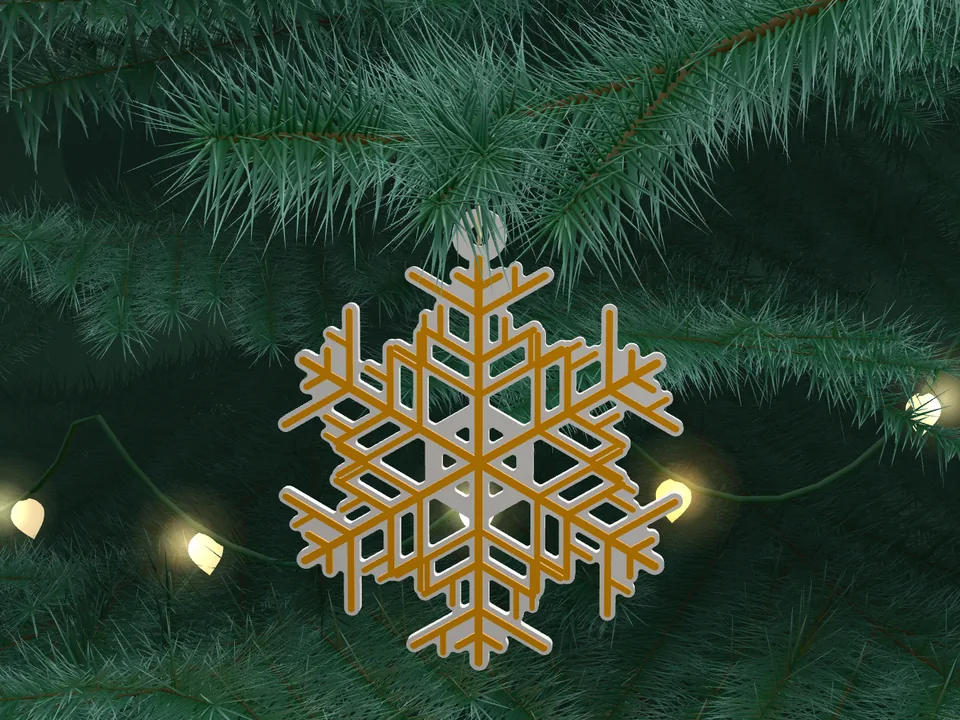
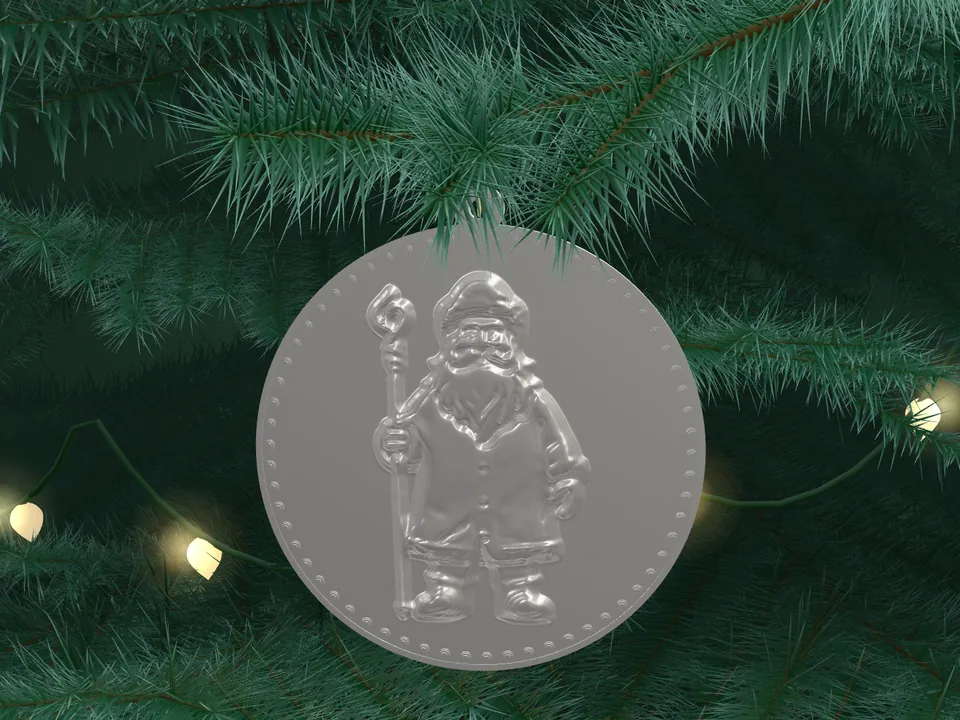
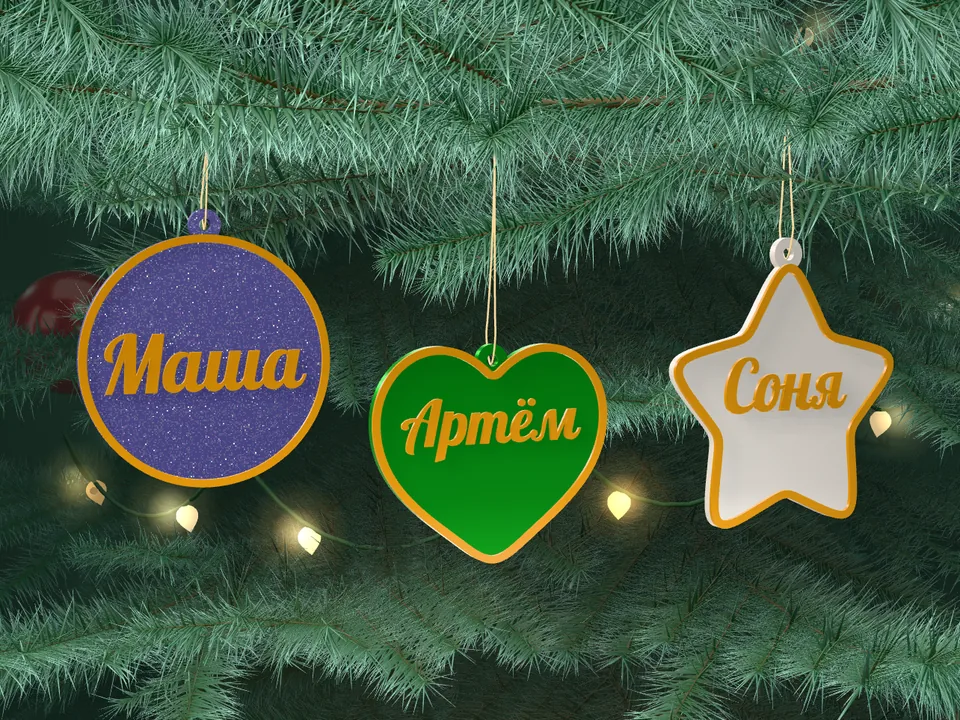
The same generator makes name ornaments (Cyrillic and Latin, any catalogue font or your own .ttf / .otf), stars and procedurally generated snowflakes, embossed Soviet‑style foil cards, Voronoi lace balls, retro bulbs and beads on a cord, figurines for the 2027 Year of the Fire Goat, and tabletop mini trees.
PLA softens around 55 °C: hang ornaments on LED lights, not against incandescent bulbs. Caps, beads and bulbs are small parts — keep them away from children under 3.
Ornament Craft — a Christmas ornament generator
Twisted fins, baubles, icicles, name ornaments and snowflakes, real Bambu Lab spool colours and a ready 3MF with the vase‑mode settings. The page has an English version: switch to EN at the top.
About Ornament Craft